We research products independently. When you buy through links on this page, we may earn a commission from Amazon at no extra cost to you. As an Amazon Associate we earn from qualifying purchases. Read our affiliate disclosure.
The most important wood turning guard is the one you wear. Lathes rarely have guards over the work, so your face shield, respirator and clothing are the protection between you and a blank that comes off the chuck, a tool that catches, or a cloud of fine sanding dust.
What matters is impact rating, fit and whether you will actually wear it every time. A shield you push up because it fogs, or a mask that pinches, does not protect you. Below are six picks covering face, lungs, ears and clothing, each checked against the American Association of Woodturners (AAW) Safety Guidebook for Woodturners and the makers' published ratings.
Our top picks at a glance
Quick picks
- Best Face Shield: Uvex Bionic S8510. Best for an impact-rated, anti-fog shield with a chin guard.
- Best Value Face Shield: Uvex Bionic S8500. Best for the same frame and rating with an uncoated visor.
- Best Powered Face Shield: Trend Airshield Pro. Best for face and dust protection in one, with filtered airflow.
- Best Respirator: 3M Rugged Comfort Quick Latch 6503QL. Best for a reusable half mask that takes P100 filters.
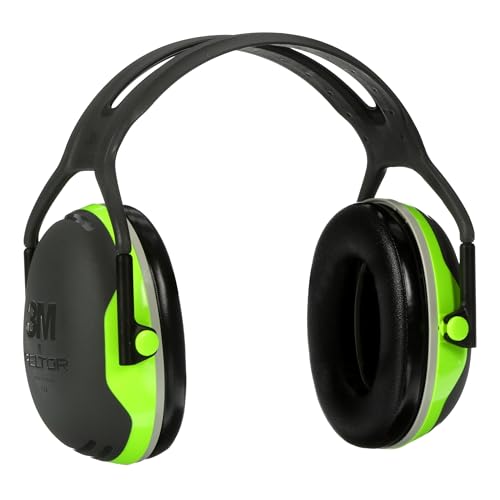
- Best Hearing Protection: 3M Peltor X4A. Best for earmuffs above the AAW's NRR 25 dB suggestion.
- Best Woodturning Smock: Savannah FeatherLite. Best for a lightweight smock with a zip-up mesh collar.
Comparison table
| Gear | Best for | Protects | Key rating or spec | Notes | Amazon |
|---|---|---|---|---|---|
| Uvex Bionic S8510 | Face shield | Face, eyes (secondary) | ANSI Z87+ high impact, CSA Z94.3 | Anti-fog polycarbonate visor, chin guard | Check price |
| Uvex Bionic S8500 | Value shield | Face, eyes (secondary) | ANSI Z87+ high impact, CSA Z94.3 | Uncoated visor | Check price |
| Trend Airshield Pro | Powered shield | Face, eyes, lungs | EN 12941 TH2P (APF 20); visor listed as Z87.1+ by a US retailer | Battery-powered filtered airflow | Check price |
| 3M 6503QL | Respirator | Lungs | Takes 3M bayonet filters such as 2091 P100 | Filters sold separately | Check price |
| 3M Peltor X4A | Hearing | Ears | NRR 27 dB (3M Canada) | Over-the-head band, dielectric | Check price |
| Savannah FeatherLite Smock | Clothing | Body, clothes | 100% lightweight polyester | Zip to collar, mesh collar | Check price |


The best woodturning safety gear, reviewed
1. Uvex Bionic Face Shield S8510: Best Face Shield
Who it's for: every turner who does not yet own an impact-rated shield.
The Bionic's ratings are what make it our pick. Honeywell's distributors list the S8510 as rated to ANSI Z87+ (high impact) and CSA Z94.3. The polycarbonate visor measures about 9-1/2 x 14-1/4 inches with an anti-fog coating, and the full crown and chin guard cover more of the face than a brow-mounted shield. Ratchet headgear adjusts for fit, and the visor is replaceable.
Uvex and its retailers state that the shield is secondary protection and must be worn with safety glasses or goggles. Listings also say it fits over most goggles and respirators, which matters if you wear a half mask underneath.
Pros
- ANSI Z87+ high-impact and CSA Z94.3 ratings
- Chin guard and full crown coverage
- Anti-fog coated visor
- Replaceable visor
Cons
- Must be worn with safety glasses
- Lens thickness is listed differently by some retailers
- Anti-fog coating needs gentle cleaning

Uvex Bionic Face Shield S8510 with Anti-Fog Visor
by Uvex by Honeywell
2. Uvex Bionic Face Shield S8500: Best Value Face Shield
Who it's for: turners who want the Bionic's protection for less and do not struggle with fogging.
The S8500 uses the same frame and the same ANSI Z87+ (high impact) and CSA Z94.3 ratings, with an uncoated clear polycarbonate visor of about 9-1/2 x 14-1/4 x 0.040 inches on black ratchet headgear. Without the anti-fog coating, it may fog more in cold shops or when worn with a mask, but the impact protection is the same.
Pros
- Same impact ratings as the S8510
- Lower price tier
- Full crown and chin coverage
- Replaceable visor
Cons
- Uncoated visor can fog
- Secondary protection only; wear glasses underneath
- No dust protection

Uvex Bionic Face Shield S8500 (Uncoated Visor)
by Uvex by Honeywell
3. Trend Airshield Pro: Best Powered Face Shield
Who it's for: turners who sand a lot, wear glasses that fog under a mask, or want face and lung protection in one piece.
The Airshield Pro is a powered air-purifying faceshield. A battery-powered fan pulls air through filters and blows it down across your face, which keeps the visor clear and provides respiratory protection. Retailers list it as EN 12941 TH2P with an assigned protection factor of 20, with TH2P filters that capture 98 percent of particles 0.6 micron and larger, airflow of about 160 to 200 liters per minute, and an eight-hour rechargeable battery. A US retailer lists the visor as ANSI Z87.1+ rated polycarbonate; UK listings give EN 166 ratings instead.
It is heavier than a passive shield (listings range from about 2.2 to 2.5 lb) and in the premium price tier. Check that the unit you buy carries US markings and a US charger.
Pros
- Face and dust protection in one
- Filtered airflow keeps the visor from fogging
- Airflow over the face in warm shops
- Eight-hour battery
Cons
- Premium price tier
- Heavier than a passive shield
- Ratings vary by market; check the label

Trend Airshield Pro Powered Respirator Faceshield
by Trend
4. 3M Rugged Comfort Quick Latch 6503QL: Best Respirator
Who it's for: turners who want reliable lung protection under a face shield.
Fine dust is the slow-acting hazard. The AAW warns that fine particulates can be carried deep into the lungs over repeated exposures and that sanding, grinding and sawing dust can be as harmful as dust from the lathe. A reusable half mask with particulate filters is the practical answer for most hobby shops.
The 6503QL (large size) is a half facepiece from 3M's Rugged Comfort line with a quick-latch drop-down mechanism, so you can lower it with one hand between tasks. It uses 3M's bayonet filter connection, and filters are sold separately. For wood dust, 3M's 2091 P100 particulate filters are a common pairing; they are NIOSH approved for particulates and are not for vapors, so use different cartridges for solvent-based finishes. Follow 3M's fit and seal-check instructions every time you put it on.
Pros
- Reusable facepiece with replaceable filters
- One-hand drop-down latch
- Fits under the Uvex Bionic
- P100 filters available
Cons
- Filters sold separately
- Must fit and seal well, so beards reduce protection
- Not for vapors without different cartridges
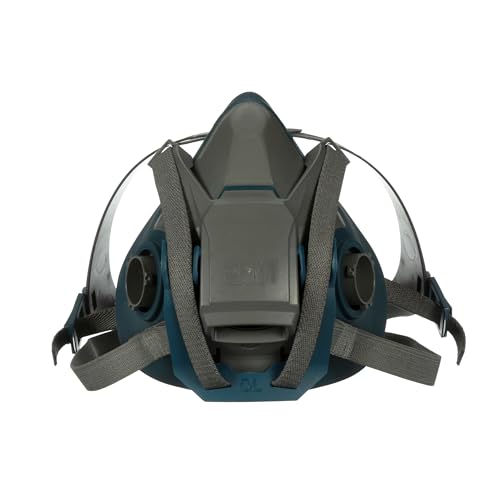
3M Rugged Comfort Quick Latch Half Facepiece Reusable Respirator 6503QL
by 3M
5. 3M Peltor X4A Over-the-Head Earmuffs: Best Hearing Protection
Who it's for: turners who run long sessions, grind tools or run a dust collector nearby.
The AAW notes that turning is relatively quiet, but hearing damage can still build over extended periods, and it recommends hearing protection rated NRR 25 dB or higher. 3M Canada lists the X4A at NRR 27 dB, while 3M's US X-Series page gives the X4 line a 25 to 27 dB range depending on attachment type. Retailers describe the X4A as dielectric, with replaceable cushions and foam liners.
Earmuffs go on and off quickly between tasks. Check that they fit together with your face shield's headgear before a long session.
One safety note: on April 25, 2024, the CPSC announced a 3M recall of Peltor X4 series earmuffs, X4A included, because the colored plastic part of the earcup can crack. It covers units made from March 2020 through September 2022; the date is printed as MM/YYYY on the outside of the earcups. If you own an older pair in that range, stop using it and contact 3M for a free replacement. Check the date on a new pair, too, if you buy from a third-party seller.
Pros
- NRR 27 dB per 3M Canada
- Meets the AAW's NRR 25 dB suggestion
- Replaceable hygiene kit
- Quick on and off
Cons
- 2020-2022 production was recalled; check the earcup date
- Can be warm in summer
- Fit with some face shields varies
- Labeled NRR is a lab figure; real-world protection is lower
6. Savannah FeatherLite Smock for Woodturning: Best Woodturning Smock
Who it's for: turners tired of shavings down the shirt, and anyone whose clothes have loose cuffs or buttons.
A woodturner's smock is about two things: keeping chips out and having nothing that can catch. The Savannah FeatherLite is listed in 100% lightweight polyester with a zipper that runs to the top of a stretchable mesh collar, which closes the neck where shavings usually get in. It has a large front pocket with a flap and two back pockets, so pockets on the chest do not collect chips.
The listing we read did not describe the cuffs. Whatever smock you choose, make sure the sleeves can be closed snugly at the wrist. The AAW's rule is to avoid loose clothing, jewelry or anything that may catch on rotating parts.
Pros
- Zip-up collar keeps shavings out
- Lightweight polyester sheds dust
- Flap-covered front pocket
- Back pockets stay chip-free
Cons
- Cuff design not described in the listing
- Polyester can be warm in a hot shop
- Sizing varies; check the chart

Buying guide: choosing a wood turning guard and safety gear
Face shield vs safety glasses
The AAW's guidebook is clear: full face shields provide the protection needed for bowls, vessels and any turning involving chucks and faceplates, and safety glasses or goggles with side protection are the minimum for small items. Since most turning involves a chuck or faceplate, a face shield is the default. Wear safety glasses underneath, as Uvex specifies for the Bionic.
Impact ratings
In the US, look for the ANSI Z87.1 marking with a "+" (Z87+), which indicates high-impact testing. Shields marked only for splash or dust are not lathe protection. Check the actual marking on the visor and frame, not just the listing.
Coverage and fit
Choose a shield that covers your chin and lower face, not just your forehead and eyes. Ratchet headgear lets you set it snug enough not to slip when you lean in. The AAW also advises keeping shields clean and free of scratches, and learning to lift the shield to talk rather than leaving it up.
Respiratory protection
The AAW highly recommends an efficient dust collection intake at the lathe and a high-airflow dust removal system, and it warns that dust from exotic woods such as cocobolo particularly bothers some people. Respiratory gear is the second line:
- Half mask with P100 filters: effective and affordable, but needs a good seal and is incompatible with a full beard.
- Powered air shield: face and lungs in one, comfortable for long sessions, premium price.
See our best wood for lathe turning guide for species known to irritate.
Hearing
The AAW suggests hearing protection with an NRR of 25 dB or higher for extended turning, grinding or power carving. If your power carving means an angle grinder, our guide to wood carving discs covers the attachments. Earmuffs are quick to put on; foam plugs are cheap and comfortable under a shield.
Clothing
Tie back long hair, bangs and beards; no gloves, no loose sleeves, no jewelry, per the AAW. A smock with a closed collar and snug cuffs keeps chips out and leaves nothing to catch.
Don't forget the grinder
The AAW says to wear a face shield or safety glasses at the sharpening station and a dust mask when dressing wheels. See how to sharpen lathe tools.
Price tiers
- Budget: a Z87+ face shield, foam earplugs and a disposable P100 or N95-class mask.
- Mid-range: a reusable half mask with P100 filters, earmuffs and a smock.
- Premium: a powered air-purifying faceshield.
Building a complete safety kit
Safety gear works as a system. Match it to the work:
- Bowls and anything on a chuck or faceplate: full face shield over safety glasses, every time. Our bowl turning guide explains why bowls carry more risk.
- Sanding, exotic and spalted woods: add a respirator and dust collection. See the species notes in our wood blanks for turning picks.
- Long sessions and grinding: add hearing protection.
- Every session: a smock or close-fitting clothes, hair tied back, no gloves or jewelry.
Hang your gear beside the lathe so it is the first thing you reach for, and replace scratched visors and spent filters. For shop-side upgrades at the lathe, see our wood lathe accessories guide.
How we chose
We did not test this gear ourselves. We chose products by their published ratings (ANSI Z87+, EN 12941, NIOSH filter class, NRR) from makers and distributors, and by how well they match the AAW's safety guidance on face, respiratory, hearing and clothing protection. Where ratings or specs differ between sources, such as the Airshield Pro's visor rating and weight, we say so.
FAQ
Do I need a face shield for woodturning?
Yes. The AAW's Safety Guidebook for Woodturners says full face shields provide the protection needed for bowls, vessels and any turning involving chucks and faceplates, with safety glasses or goggles with side protection as the minimum for small items. Wear safety glasses under the shield too; Uvex says its Bionic is secondary protection.
What rating should a woodturning face shield have?
Look for ANSI Z87.1 high-impact marking (Z87+). The Uvex Bionic, for example, is rated to ANSI Z87+ (high impact) and CSA Z94.3. A shield without an impact rating is a splash or dust guard, not lathe protection.
What respirator is best for woodturning dust?
A properly fitted respirator with particulate filters, such as a 3M half facepiece with P100 filters, or a powered air shield. The AAW highly recommends dust collection at the lathe as well, since fine dust from sanding can be inhaled deep into the lungs.
Why do woodturners wear a smock?
A smock keeps shavings out of your shirt and off your clothes, and its snug collar and closed front have no loose parts to catch. The AAW warns against loose clothing, jewelry or anything dangling that can catch on rotating parts.
What hearing protection do woodturners need?
The AAW recommends hearing protection for extended periods of turning, grinding or power carving, and suggests choosing devices rated NRR 25 dB or higher. The 3M Peltor X4A earmuffs are listed by 3M Canada at NRR 27 dB.
Verdict
Start with the Uvex Bionic S8510 and a pair of safety glasses: it is the single most important purchase after the lathe. Add a 3M 6503QL half mask with P100 filters for sanding, Peltor X4A earmuffs for long sessions and a FeatherLite smock to keep chips out. If you sand a lot or fight fogging, the Trend Airshield Pro combines face and lung protection. For more safe-start advice, read woodturning for beginners.
Related: see our lathe dust collection guide.