We research products independently. When you buy through links on this page, we may earn a commission from Amazon at no extra cost to you. As an Amazon Associate we earn from qualifying purchases. Read our affiliate disclosure.
Lathe sanding is where a good shape becomes a good surface, and it is also where many turners lose an afternoon. Sanding a spinning bowl with a folded sheet works, but it is slow, it heats your fingers, and it leaves rings where the paper sat still. Power sanding with small hook and loop discs, or inertia sanding with a free-spinning rotary sander, is faster, cooler and leaves fewer marks.
What matters most is the sanding method, the abrasive and the speed. You also need dust protection: the AAW identifies sanding as the most harmful dust-producing step in woodturning. Below are five lathe sanding tools and supplies, with the specs each maker or retailer lists, and a guide to grits, speeds and technique.
Our top picks at a glance
Quick picks
- Best Rotary Bowl Sander: Robert Sorby H9086 Sandmaster. Best for cool, controlled inertia sanding inside and outside bowls.
- Best Starter Disc Kit: Peachtree 15 Piece Sanding Disc and Soft Foam Mandrel Set. Best for trying drill-powered sanding with 1-, 2- and 3-inch mandrels.
- Best Disc Refills: Serious Grit 2-Inch Hook and Loop Film Discs. Best for stocking up on 2-inch film discs for drill or rotary sanders.
- Best Sandmaster Refills: Robert Sorby 412A120 2-inch discs. Best for matching Sorby discs to the Sandmaster's pad.
- Best Dust Protection for Sanding: 3M 6503QL. Best for a reusable half mask that drops down between tasks.
Comparison table
| Product | Best for | Type | Disc size | What you get | Amazon |
|---|---|---|---|---|---|
| Robert Sorby H9086 Sandmaster | Rotary bowl sanding | Inertia sander on bearings, with handle | 2 in. pad (3 in. optional) | Tool with 2 in. hook and loop head; 10-1/2 in. overall per listing | Check price |
| Peachtree 15 Piece set | Starter kit | Drill-powered mandrels | 1, 2 and 3 in. | One mandrel of each size plus one disc each of 80, 120, 150 and 220 grit per size | Check price |
| Serious Grit 2-inch film discs | Refills | Hook and loop film discs | 2 in. | Pack of 50 | Check price |
| Robert Sorby 412A120 | Sandmaster refills | Hook and loop discs | 2 in. | 10 discs, 120 grit | Check price |
| 3M 6503QL | Dust protection | Reusable half facepiece | n/a | Mask only; filters sold separately | Check price |


The best lathe sanding tools, reviewed
1. Robert Sorby H9086 Sandmaster: Best Rotary Bowl Sander
Who it's for: bowl turners who want a cooler, more controllable way to sand than a drill-powered disc.
The Sandmaster is a handheld rotary sander, sometimes called an inertia or self-driven sander. The head spins freely on bearings, so when you touch the disc to the spinning bowl, the wood drives the disc. Sorby's listing describes a 2-inch Velcro (hook and loop) pad for quick changes of abrasive discs, with a 3-inch pad available as an optional extra, and the listing title gives 10-1/2 inches overall.
Because the disc is always moving relative to the wood, it cuts without leaving the concentric rings a stationary sheet does, and it runs cooler than a drill-powered disc. It does not need a drill or a cord, and the handle keeps your fingers away from the work. The trade-off is speed: an inertia sander removes material more slowly than a powered disc, so make sure your tool marks are small before you start.
Pros
- Free-spinning head runs cool
- No drill or power needed
- Handle keeps fingers clear of the work
- Optional 3-inch pad for larger bowls
Cons
- Slower than drill-powered sanding
- Sorby refills cost more than generic discs
- Reach inside deep forms is limited

Robert Sorby H9086 Sandmaster Bowl Sanding Tool with 2 in. Pad
by Robert Sorby
2. Peachtree 15 Piece Sanding Disc and Soft Foam Mandrel Set: Best Starter Disc Kit
Who it's for: turners who want to try drill-powered sanding and are not sure which pad size they will use most.
Peachtree's set includes one each of 1-, 2- and 3-inch bowl sanding mandrels with soft foam pads, plus one disc in each of 80, 120, 150 and 220 grit for each mandrel size, per the listing. The mandrels chuck into a drill, and the soft foam lets the disc follow the curve of a bowl instead of digging in at the edge.
It is a sampler: one disc per grit per size will not last long. Use it to find the size you like, then buy refills in bulk. The 2-inch size is the most common for bowls on a midi lathe, the 1-inch reaches tight curves and small pieces, and the 3-inch covers large, open surfaces faster.
Pros
- Three mandrel sizes in one kit
- Soft foam follows curves
- Four common grits included
- Easy way to find the size you prefer
Cons
- One disc per grit per size
- Needs a drill
- Mandrel shank size not detailed on the listing; check your drill chuck

Peachtree Woodworking 15 Piece Sanding Disc and Soft Foam Mandrel Set
by Peachtree Woodworking Supply
3. Serious Grit 2-Inch Hook and Loop Film Discs: Best Disc Refills
Who it's for: anyone who power sands regularly and goes through a lot of 2-inch discs.
Serious Grit sells 2-inch hook and loop film discs in a pack of 50, marketed for woodturning, bowl sanding and drill attachment pads. Film-backed discs use a thin plastic backing instead of paper, which generally makes them flexible and resistant to tearing on edges and rims.
Two inches is the most common disc size for bowls, and hook and loop discs fit any 2-inch hook pad, including a rotary sander's head or a drill mandrel. Check the grit breakdown in the listing you order, since packs vary, and buy extra of the grit you start with, because that grit does the most work.
Pros
- 2-inch size fits most bowl pads
- Film backing resists tearing
- 50 discs per pack
- Works with drill mandrels and rotary sanders
Cons
- Grit mix varies by pack; check the listing
- Lesser-known brand
- No pad or mandrel included

Serious Grit 2-Inch Hook and Loop Film Sanding Discs (Pack of 50)
by Serious Grit
4. Robert Sorby 412A120 2-Inch Discs: Best Sandmaster Refills
Who it's for: Sandmaster owners who want discs made for that tool.
Sorby sells 2-inch hook and loop discs for the Sandmaster in 10-packs, and the 412A120 is the 120-grit pack. Sorby refills also come in 3-inch sizes and other grits (listings show 60, 180, 240 and 400), so you can build a full progression.
Generic 2-inch hook and loop discs also fit the Sandmaster's pad, and they cost less. The case for Sorby's own discs is a predictable fit on the head and consistency from pack to pack. Most turners mix: Sorby discs for the grit they use most, generic film discs for the rest.
Pros
- Made for the Sandmaster's pad
- Range of grits and a 3-inch size
- Consistent fit
- 120 grit is a common starting grit
Cons
- One grit per pack
- Costs more than generic discs
- Only 10 discs

Robert Sorby 412A120 Sandmaster 2 in. 120 Grit Sanding Discs (10 Pack)
by Robert Sorby
5. 3M 6503QL Half Facepiece: Best Dust Protection for Sanding
Who it's for: every turner who power sands.
Sanding is the dustiest step in turning, and power sanding throws more fine dust than anything else at the lathe. The 6503QL (large size) is a half facepiece from 3M's Rugged Comfort line with a quick-latch drop-down mechanism, so you can lower it with one hand between tasks. It uses 3M's bayonet filter connection, and filters are sold separately; 3M's 2091 P100 particulate filters are a common pairing for wood dust. They are for particulates, not vapors, so use different cartridges for solvent-based finishes.
A mask is the second line of defense. The AAW highly recommends dust collection at the lathe as well; our lathe dust collection guide shows how to set it up. Follow 3M's fit and seal-check instructions every time you put it on.
Pros
- Drops down with one hand
- Reusable, with replaceable filters
- Fits standard 3M bayonet filters
- Works with safety glasses and many face shields
Cons
- Filters sold separately
- Not a substitute for dust collection
- Fit varies by face; choose the right size
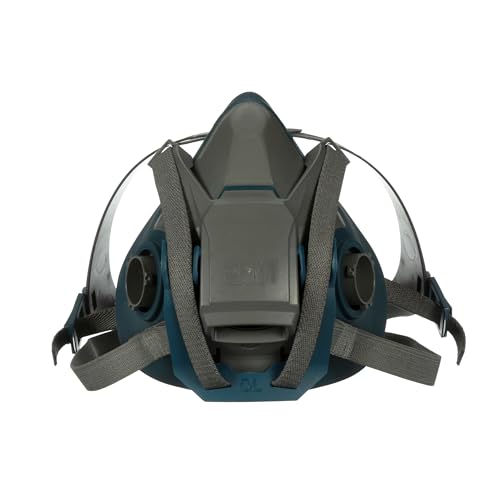
3M Rugged Comfort Quick Latch Half Facepiece Reusable Respirator 6503QL
by 3M
Buying guide: choosing lathe sanding tools
Three ways to sand on a lathe
| Method | How it works | Strengths | Watch for | Amazon |
|---|---|---|---|---|
| Hand sanding | Folded sheet held against the spinning work | Cheap, good on spindles | Heat, rings, fingers close to the work | |
| Power sanding | Drill-driven disc on a foam mandrel | Fast stock removal, fewer rings | Can dig in at edges; more dust | See options |
| Inertia (rotary) sanding | Free-spinning head driven by the work | Cool, controlled, no power needed | Slower; needs small tool marks to start | See options |
Spindles sand well by hand, with strips of abrasive held under the work. Bowls benefit most from power or inertia sanding, especially on end grain inside the bowl, where hand sanding struggles.
Lathe sanding disc size
Two-inch discs are the most common for bowls on mini and midi lathes. One-inch discs reach tight curves and small work. Three-inch discs cover large, open surfaces quickly but are hard to use in tight transitions. A kit with several mandrel sizes, like Peachtree's, helps you decide.
Lathe sanding pads and interface pads
Soft foam mandrels and interface pads let the disc follow a curve. Firm pads cut flatter and faster but can dig in at the rim. For bowl interiors, softer is usually better. Hook and loop pads wear out over time; replace them when discs stop holding.
Abrasive backings
- Paper-backed discs: inexpensive, fine for light use.
- Cloth-backed discs: tougher, better on edges and rims.
- Film-backed discs: thin, flexible and tear-resistant, with even grit.
- Mesh abrasives: open mesh that lets dust pass through, which helps with dust extraction and clogging.
Grit progression
Start with the finest grit that removes your tool marks. That is often 120 or 150 after a clean cut, or 80 after a rough one. Then work up without skipping more than one step: for example 120, 180, 240, 320, 400. Skipping grits leaves scratches the next grit cannot remove quickly. Before moving to the next grit, stop the lathe and look at the surface under raking light.
How to sand on the lathe, step by step
- Get the best cut you can. A sharp tool and a clean final pass save more sanding than any abrasive.
- Remove the tool rest. The AAW advises taking the rest away before sanding so your fingers cannot be trapped between the rest and the work.
- Set a moderate speed. Use a speed lower than your final cutting speed. The AAW warns that too much speed builds heat, which can cause fine heat checks in some woods. Our wood lathe speed chart gives the AAW's suggested spindle speeds as an upper limit.
- Present the abrasive lightly, below center. Hold the sander or drill firmly with both hands and let the disc touch the work with light pressure; most turners find a position below center height easiest to control.
- Keep the abrasive moving. Move slowly across the surface. Holding still burns the wood and the disc.
- Try reverse. If your lathe has reverse, sanding in reverse lifts the fibers from the other direction. The AAW warns that a chuck or faceplate can unscrew in reverse, so lock it with the spindle set screws and start slowly.
- Clean between grits. Wipe off dust with the lathe stopped so coarse grit does not scratch your finer passes.
- Finish. For bowls that will hold food, see our food safe finish for wood bowls guide; for gloss finishes, see our woodturning finishes.
Lathe sanding safety
- Never wrap abrasive or cloth around your fingers on spinning work. The AAW says never to use cloth on a rotating object.
- Remove the tool rest before sanding.
- Collect dust at the source and wear a respirator. The AAW identifies sanding as the most harmful dust-producing step and highly recommends dust collection at the lathe.
- Keep speed moderate. Heat checks and burnt discs are signs you are going too fast or pressing too hard.
- Wear eye protection. A disc can throw grit, and a bowl can still fail during sanding.
How we chose
We did not test these tools ourselves. We compared the pad sizes, contents and construction that Robert Sorby, Peachtree, Serious Grit and 3M list, and weighed them against the AAW's guidance on sanding safety, speed and dust. We favored hook and loop systems in the common 2-inch size, because discs from many brands fit them.
FAQ
What speed should I sand at on a lathe?
Use a moderate speed, typically lower than your final cutting speed, and remove the tool rest first, as the AAW advises. Too much speed builds heat, which can cause fine heat checks in some woods and burn out the abrasive. If the work is unbalanced, sand slower still.
What grit sandpaper should I use for woodturning?
Start with the finest grit that removes the tool marks, often 120 or 150 after a clean cut, or 80 after a rough one. Then move up without skipping more than one step, for example 120, 180, 240, 320 and 400. Coarse grits leave scratches that finer grits take a long time to remove.
What is the difference between a rotary sander and a drill-powered disc for bowls?
A rotary (inertia) sander like the Robert Sorby Sandmaster has a free-spinning head on bearings; the spinning bowl drives the disc, so it runs cool and is easy to control. A drill-powered disc on a mandrel spins under its own power, which removes material faster but needs a light touch to avoid digging in.
Should I sand in reverse on the lathe?
Running the lathe in reverse lifts the wood fibers from the other direction and can remove fuzz the forward pass leaves. The AAW warns that a chuck or faceplate can unscrew in reverse if it is not locked, so tighten the spindle set screws and start reverse at low speed.
Is sanding dust dangerous for woodturners?
Fine dust is the slow-acting hazard of woodturning. The AAW identifies sanding as the most harmful dust-producing step and warns that fine particles can be carried deep into the lungs over repeated exposures. Collect dust at the source and wear a properly fitted respirator.
Verdict
For bowls, the Robert Sorby Sandmaster is the best single lathe sanding tool: it runs cool, leaves no rings and needs no drill. If you would rather power sand, start with the Peachtree mandrel kit and stock up on 2-inch film discs. Whatever you choose, sand at a moderate speed with the tool rest removed, and wear a respirator such as the 3M 6503QL while you do it.