We research products independently. When you buy through links on this page, we may earn a commission from Amazon at no extra cost to you. As an Amazon Associate we earn from qualifying purchases. Read our affiliate disclosure.
Short answer: for most woodturners who mainly sharpen gouges, a slow-speed 8-inch bench grinder with a Wolverine-style jig is faster, cheaper and the setup most turning classes are built around. A Tormek is the better choice if you also sharpen chisels, plane irons and knives, if you never want to risk overheating an edge, or if sparks and grinding dust are a problem where you work.
The two approaches differ at the core. A Tormek T-8 turns a 10-inch water-cooled stone at about 90 to 100 RPM. A slow-speed grinder spins dry wheels at about 1,750 RPM, the speed the AAW recommends for turning tools. That single difference drives almost every trade-off below.
Our top picks at a glance

Side-by-side: Tormek vs bench grinder
| Tormek T-8 (wet stone) | Slow-speed bench grinder + jig | |
|---|---|---|
| Wheel | 250 x 50 mm (about 10 x 2 in.) SG-250 stone in water | Two 8 x 1 in. wheels, often 60 and 120 grit aluminum oxide |
| Speed | About 90–100 RPM (Tormek lists both) | About 1,750 RPM |
| Heat risk | Essentially none; water-cooled | Low at slow speed with light pressure, but possible |
| Speed of sharpening | Slower, especially to reshape | Fast touch-ups and reshaping |
| Edge finish | Fine, honed on a leather wheel | Coarser, straight off the wheel unless honed |
| Turning jigs | TNT-808 Woodturner's Kit | Oneway Wolverine, Vari-Grind, RIKON 82-1005 and others |
| Other tools | Chisels, plane irons, knives, axes, carving tools | Mostly turning tools and general grinding |
| Mess | Water trough | Dry grit and sparks |
| Price tier | Premium | Budget to mid-range (grinder plus jig) |
| Warranty | Tormek: 5 years, 8 with registration | RIKON 80-805: 5 years; WEN BG4286: 2 years; Wolverine jig: 5 years |
| Amazon | See options | See options |
Specs and warranty terms are from Tormek, RIKON, WEN and Oneway.
The differences, one by one
1. Speed and heat
The AAW's Safety Guidebook for Woodturners says about 1,750 RPM is the best single speed for sharpening turning tools and that the common 3,600 RPM grinder is much too fast for efficient sharpening. At 1,750 RPM with light pressure, HSS gouges sharpen quickly without trouble. A Tormek runs about 20 times slower and through water, so heat is never a concern, but every sharpening takes longer. If you touch up a bowl gouge several times per bowl, those minutes add up.
2. Edge quality
A Tormek stone plus its leather honing wheel leaves a finer, more polished edge than a grinder wheel. Many turners find a gouge straight off a 120-grit or finer wheel cuts perfectly well on the lathe, because the edge gets refreshed often anyway. For skews, where a keen edge matters most, a honed edge is a real advantage; a diamond hone after the grinder narrows the gap.
3. Reshaping and new grinds
Changing a bowl gouge from a traditional grind to a long fingernail grind removes a lot of steel. On a dry grinder that takes minutes; on a Tormek stone it takes much longer. Turners who regrind often, or buy new gouges that need a profile, tend to keep a grinder for this even if they own a Tormek.
4. Jigs and repeatability
Both systems give repeatable grinds. On a grinder, Oneway's Wolverine (two bases, a 27-1/2-inch V-arm and a platform) plus the Vari-Grind 2 for fingernail grinds is the reference setup. RIKON's 82-1005 is a similar single-brand system. On a Tormek, the TNT-808 Woodturner's Kit adds the SVD-186 R gouge jig, the SVS-50 multi jig for skews and parting tools, the SVD-110 rest for scrapers, the TTS-100 turning tool setter and a profiled honing wheel. Tormek's TTS-100 chart gives settings such as 45 degrees for a standard bowl gouge and 55 degrees for a deep-bowl grind. Our lathe tool sharpening jig guide compares the jigs.
5. Wheel maintenance
Aluminum oxide grinder wheels wear out of round and need regular dressing with a diamond dresser; the RIKON 80-805 includes one. The AAW's sharpening introduction notes that friable aluminum oxide wheels must be used with guards in place. CBN wheels on a slow-speed grinder do not need dressing and keep their size. A Tormek stone also wears and is trued with Tormek's own tool; it never throws sparks.
6. Versatility
A Tormek is a whole-shop sharpener: the Magnum Kit sold on Amazon bundles the T-8 Original with the TNT-808 turning kit and a hand tool kit for knives, scissors, axes and carving tools. A slow-speed grinder sharpens turning tools and drill bits and handles general grinding, but it is not the best choice for fine bench chisels or knives.
7. Cost and space
A Tormek T-8 kit sits in the premium tier. A slow-speed 8-inch grinder plus a Wolverine jig is usually a mid-range purchase, and a WEN BG4286 with a budget jig is the least expensive working setup. A grinder station needs a solid bench and dust collection for grit; the AAW's dust article recommends a shop vacuum of at least 70 cfm at the grinder, kept separate from wood dust because of sparks.
The setups we would buy
Tormek T-8 Magnum Kit
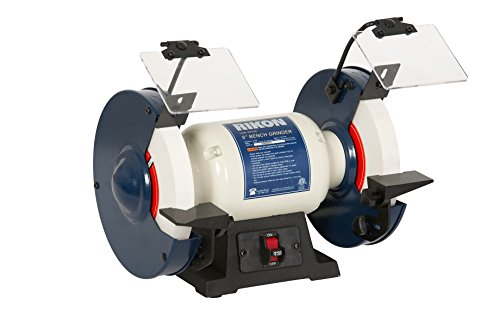
The T-8 Original turns its SG-250 stone at about 90 to 100 RPM with a 200 W continuous-duty motor and a leather honing wheel on the other side. The Magnum Kit includes the TNT-808 Woodturner's Kit and a hand tool kit. Tormek's warranty is five years, extended to eight when you register within 90 days.

Tormek T-8 Magnum Kit (T-8 Original + Hand Tool Kit + TNT-808 Woodturner's Kit)
by Tormek
Currently unavailable on Amazon
RIKON 80-805 + Oneway Wolverine
The RIKON 80-805 runs at 1,750 RPM with a 1/2 HP motor and two 8 x 1-inch wheels (60 and 120 grit) on a 5/8-inch arbor, the common CBN wheel bore. A diamond dresser is included, and RIKON covers it for five years. Mount it on one board with the Oneway Wolverine bases, which Oneway designed for 8-inch wheels on 1/2 to 1 HP grinders.
Budget: WEN BG4286
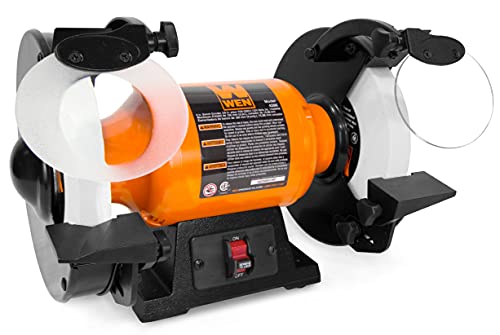
WEN lists a 3-amp soft-start motor running up to 1,750 RPM, two 8 x 1-inch aluminum oxide wheels (60 and 120 grit) and a 5/8-inch arbor, so it takes the same jigs and upgrade wheels. Warranty is two years. Check the RPM on any WEN listing, because some WEN grinders run at 3,450 RPM. Our 8-inch bench grinder guide compares more grinders.
Choose a Tormek if…
- You sharpen bench chisels, plane irons, knives or carving tools as well as turning tools.
- You never want to risk drawing the temper of an edge.
- Sparks or grinding grit are a problem in your shop or home.
- You value a honed edge straight from the machine.
Choose a slow-speed bench grinder if…
- You mostly sharpen gouges and want fast touch-ups mid-project.
- You plan to reshape grinds or buy new tools that need profiling.
- You want the setup most turning classes and books use.
- You want the lower-cost route, with room to add CBN wheels later.
Common mistakes
- Using a 3,600 RPM grinder without care. The AAW calls it much too fast; buy a slow-speed or variable-speed model, and see our variable speed bench grinder guide for how low those go.
- Buying a Tormek without the turning kit. The base machine needs the TNT-808 or equivalent jigs for gouges.
- Skipping the jig on a grinder. Freehand grinds are hard to repeat; a jig makes every touch-up identical.
- No face protection at the grinder. Wear a face shield or safety glasses, and a dust mask when dressing wheels.
How we compared
We did not test these systems ourselves. We compared the specs and warranty terms Tormek, RIKON, WEN and Oneway publish, and weighed them against the AAW's guidance on grinder speed, guards and dust. Our step-by-step how to sharpen lathe tools guide covers technique on either setup.
FAQ
Is a Tormek better than a bench grinder for lathe tools?
It is better at some things and worse at others. A Tormek runs a water-cooled stone at about 90 to 100 RPM, so it cannot overheat an edge and it leaves a fine, honed finish. A slow-speed bench grinder at about 1,750 RPM with a jig is much faster at reshaping and touching up gouges, which is why many production turners prefer it.
Can a Tormek sharpen bowl gouges?
Yes, with Tormek's woodturner's kit. The TNT-808 kit adds a gouge jig, a multi jig for skews and parting tools, a tool rest for scrapers, a turning tool setter with grind settings and a profiled honing wheel. Tormek's TTS-100 chart lists settings such as 45 degrees for a standard bowl gouge.
What speed bench grinder is best for lathe tools?
The AAW's Safety Guidebook for Woodturners says about 1,750 RPM is the best single speed for sharpening turning tools and calls the common 3,600 RPM grinder much too fast. Slow-speed 8-inch grinders such as the RIKON 80-805 and WEN BG4286 run at 1,750 RPM.
Is a Tormek worth it for a woodturner?
It is worth it if you also sharpen bench chisels, plane irons, knives and carving tools, want zero risk of overheating, or work in a space where grinding sparks are a problem. If you only sharpen turning tools and want speed, a slow-speed grinder with a jig does the job for less.
Can I use both a Tormek and a grinder?
Yes, and many turners do: they shape or reshape on a slow-speed dry grinder, then use a wet stone or hone for the final edge. It is the most expensive route but combines speed with a refined edge.
Verdict
For a woodturner who mainly sharpens gouges, a RIKON 80-805 with a Oneway Wolverine jig is the better buy: faster, cheaper and the standard setup. Choose the Tormek T-8 Magnum Kit if you sharpen across the whole shop and want a cool, honed edge every time. Either way, the jig matters as much as the machine, and a sharp bowl gouge is the payoff.